

Suthra Punjab Waste to Value: Transforming Punjab's Waste into Clean Energy and Green Jobs
Suthra Punjab Authority's Waste to Value initiative converts municipal solid waste into clean energy, recovered materials and green jobs across all 36 districts of Punjab through circular economy innovation and sustainable valorization.
Suthra Punjab Waste to Value
Circular Economy for a Greener Punjab
Suthra Punjab Authority's Waste to Value initiative converts municipal solid waste into clean renewable energy, recovered materials and 140,000+ green jobs across Punjab through circular economy innovation and international partnerships.
Suthra Punjab Waste to Value: Circular Economy for a Cleaner Punjab

The Suthra Punjab Waste to Value Cell drives Punjab's transition to a circular and climate-smart economy by converting municipal, organic and inorganic waste into clean energy, raw materials and marketable products across all 36 districts. Through Pakistan's first 50 MW waste to electricity plant and large scale recycling projects supported by biogas, composting and black soldier fly processing pilots, the Cell promotes scalable low-carbon solutions province wide. Anchored in resource efficiency, zero waste targets and carbon neutrality, Suthra Punjab Authority fosters green entrepreneurship, innovation and private sector participation. Aligned with global frameworks including the SDGs, Paris Agreement and UNEP Waste Wise Cities Initiative, Suthra Punjab advances international partnerships and reaffirms Punjab's commitment to sustainable urbanization, environmental innovation and climate leadership.
Mehmood Booti Dumpsite Rehabilitation: Lahore's Green Reinvention
Lahore's first large legacy open dumpsite long a methane and leachate liability is being scientifically capped and repurposed as a solar and green corridor by Suthra Punjab Authority. Converting decades of collect and dump practices into a circular economy and climate asset, this rehabilitation blueprint demonstrates how legacy environmental risk can finance its own sustainable transition.
Before ← Drag to compare → After
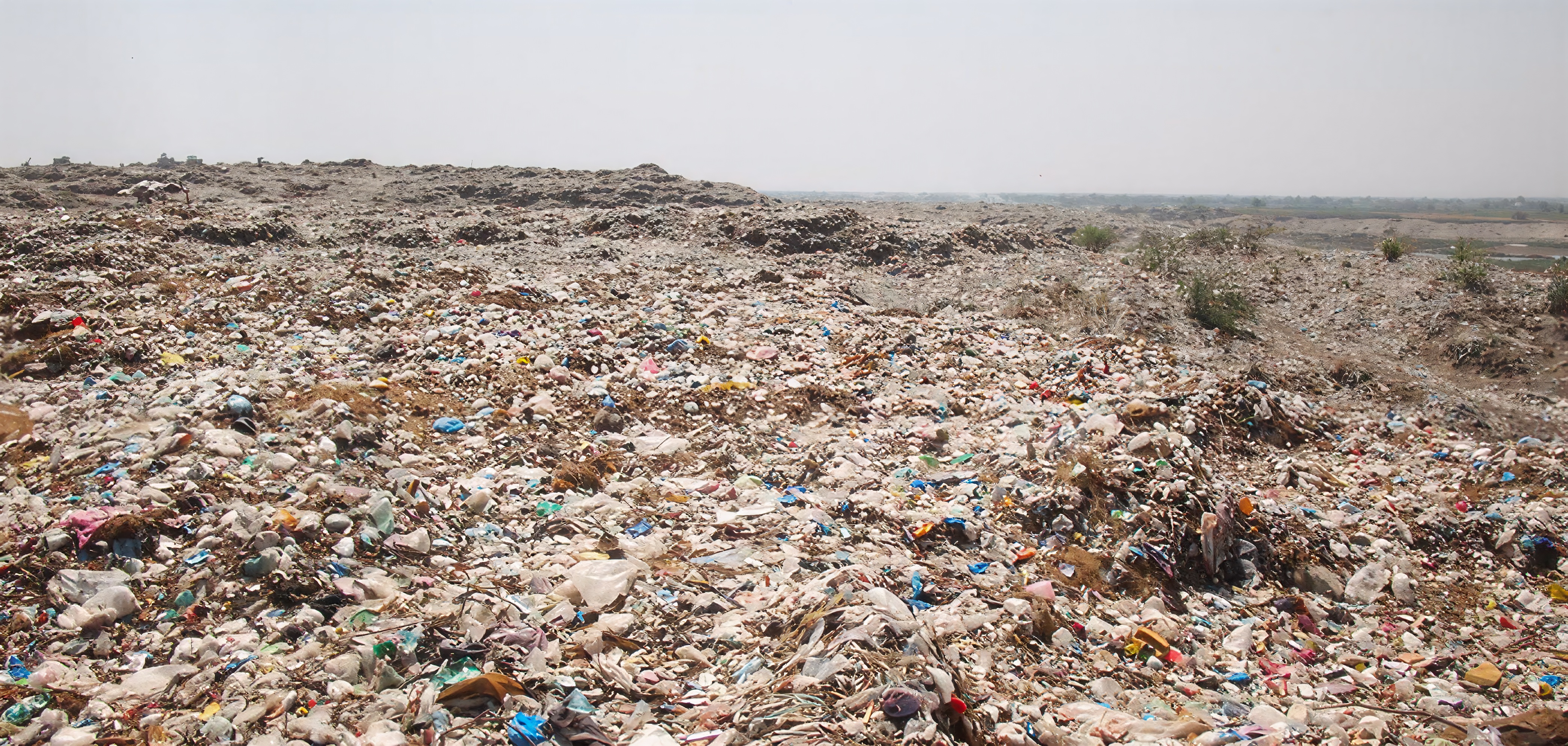
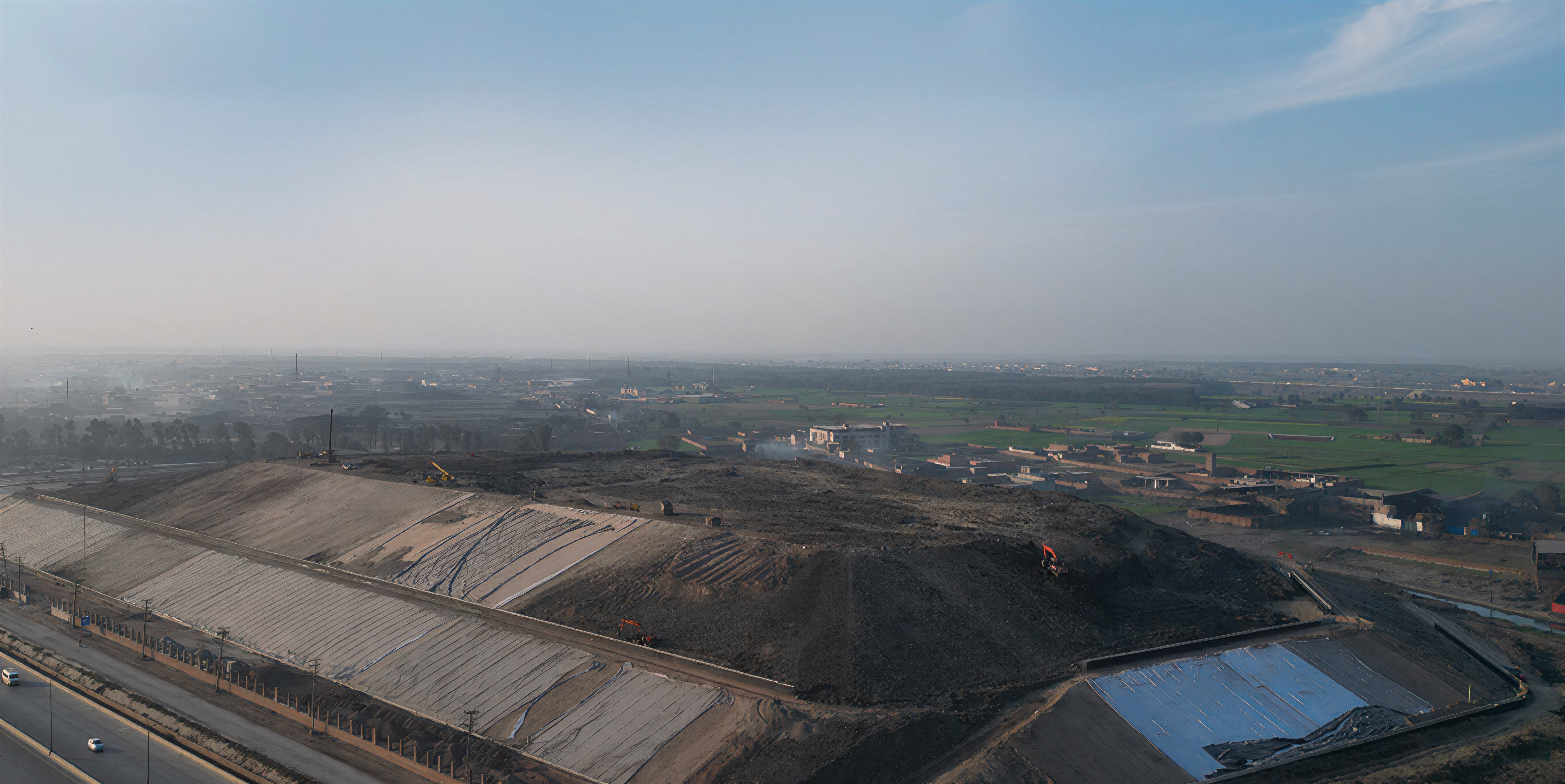
- →49 acre decommissioned dumpsite in Lahore currently being scientifically reclaimed through stabilization, leachate management and slope stabilization under Suthra Punjab Authority
- →5 MW solar photovoltaic capacity to be installed generating clean renewable energy from a former waste site
- →25,000+ indigenous trees to be planted for carbon sequestration and biodiversity restoration across the rehabilitated site
- →Rehabilitation will eliminate environmental hazards contributing to cleaner air, soil and groundwater for surrounding Lahore communities
- →Carbon abatement expected to reach approximately 100,000 tCO₂e per year upon project completion
- →Project is in active execution phase with a total capital expenditure of 15 million US dollars
- →Investment payback expected within 7 to 9 years through carbon credit revenue and solar power generation under Suthra Punjab's circular economy model
Lakhodair Landfill Valorization

The Suthra Punjab Lakhodair Landfill Valorization Project captures landfill gas to generate up to 50 GWh of clean renewable energy annually reducing 190,000 tons of CO₂ equivalent emissions and advancing sustainable climate-resilient urban development across Lahore.
THE TRANSFORMATION
- →Capturing and utilizing methane from the Lakhodair landfill Lahore for clean renewable energy generation
- →Conversion of landfill gas into Renewable Natural Gas or electricity under Suthra Punjab's circular economy model
- →Production of 35 to 50 GWh of renewable power annually for Punjab's clean energy targets
- →Mitigation of approximately 190,000 tons of CO₂ equivalent emissions per year contributing to Pakistan's climate commitments
INVESTMENT SNAPSHOT
- →CAPEX: 30 to 35 Million US dollars in green infrastructure investment
- →Carbon Abatement: approximately 190,000 tCO₂e per year
- →Renewable Power: 35 to 50 GWh per year through electricity or Renewable Natural Gas
- →Payback: Ongoing with consistent revenue generation from multiple streams
- →Revenue Streams: Power sales and verified carbon credits under Article 6 framework
IMPACT
- →Significant reduction of landfill gas emissions contributing to climate-resilient infrastructure across Lahore
- →Direct contribution to sustainable landfill management and renewable energy generation targets for Punjab
- →Creation of 700 to 1,000 green jobs enhancing the local economy under Suthra Punjab Authority
Offal to Biogas Project
The Suthra Punjab Offal to Biogas Project introduces an innovative circular economy solution that converts animal waste into renewable energy and organic fertilizer through anaerobic digestion. By processing up to 50,000 tons of animal offal annually the facility generates clean biogas, electricity and compost contributing to Punjab's sustainable waste management and clean energy goals.

THE TRANSFORMATION
- →A sustainable waste to energy initiative under Suthra Punjab Authority that converts animal offal into renewable biogas, electricity and organic fertilizer.
- →Designed to process 50,000 tons of animal waste per year through anaerobic digestion technology across Punjab.
- →Generates approximately 2.1 GWh per year of renewable electricity supplying clean power to the grid or industrial facilities.
- →Produces organic compost as a byproduct enhancing soil fertility and promoting eco-friendly agriculture across Punjab.
- →Reduces 20,000 to 25,000 tCO₂e emissions annually supporting Pakistan's climate action and circular waste management goals.
INVESTMENT SNAPSHOT
- →CAPEX: PKR 3 Billion approximately USD 10 Million in green infrastructure
- →Renewable Electricity: 2.1 GWh per year
- →Green Jobs: 200+ direct and indirect employment opportunities across Punjab
- →Carbon Abatement: 20,000 to 25,000 tCO₂e per year
- →Feedstock: 50,000 tons per year of animal offal and organic waste
IMPACT OF SCALE UP PROJECT
- →Converts 50,000 tons of animal offal annually into biogas, compost and organic fertilizer under Suthra Punjab's circular economy model.
- →Reduces methane emissions by 140,000 to 160,000 tons of CO₂e per year equivalent to removing 30,000 cars from the road.
- →Promotes large scale waste diversion from open dumping and urban drains across Punjab.
- →Provides sustainable nutrient-rich organic fertilizer to support regenerative and climate-smart agriculture in Punjab.
- →Creates hundreds of green jobs in waste collection, processing and plant operations under Suthra Punjab Authority.
- →Contributes to methane mitigation, circular economy and climate resilience across all 36 districts of Punjab.
- →Serves as a replicable decentralized model for cities across the province and developing countries.
- →Demonstrates circular economy innovation by transforming animal waste into renewable energy and agricultural value.
Legacy Dumpsite Restoration
Under the Suthra Punjab Program, legacy dumpsites in Bahawalpur and Gujranwala are being reclaimed into green, climate-positive assets. Through scientific stabilization and re-vegetation, these sites will host urban forests and solar zones that improve air quality and support carbon neutrality. Significant reduction in methane emissions, contributing to improved waste management and climate resilience. Creation of green public spaces, promoting environmental and community well-being. A replicable model for sustainable restoration of legacy dumpsites under the Suthra Punjab initiative.
THE TRANSFORMATION
- →25 acres in Bahawalpur and 9 acres in Gujranwala planned to be scientifically reclaimed through waste profiling, slope stabilization, surface capping, leachate and gas control, and re-vegetation with native species.
- →5 MW solar photovoltaic capacity will be installed.
- →25,000 indigenous trees are planned to be planted for carbon sequestration and biodiversity.
- →Repurposed sites to create green, low-carbon zones that enhance air quality, mitigate urban heat, and contribute to climate resilience.
INVESTMENT SNAPSHOT
- →CAPEX: USD 15 Million
- →Carbon Abatement: ~70,000 tCO₂e/year (Methane abatement + sequestration)
- →Renewable Power: 5 MW solar (~7,500 MWh/year)
- →Revenue Streams: Carbon credits + Solar power generation (USD 1.1 Million/year)
- →Payback: 7-9 years

25 MW Waste to Energy Project
The 25 MW Waste to Energy Project, Punjab's first large-scale facility of its kind, will convert 1,600 tons of waste daily into clean electricity for over 150,000 homes. To be implemented under a PPP BOOT model with USD 160 million in private investment, it will cut up to 220,000 tons of CO₂ emissions annually and create more than 1,000 green jobs.

THE TRANSFORMATION
- →Will be Punjab's first large scale Waste to Energy (WtE) facility, converting 1,600-2000 tons of municipal solid waste (MSW) per day into renewable electricity through advanced thermal treatment technology (mass-burn incineration with energy recovery).
- →Estimated to supply clean power to over 150,000 households, helping reduce reliance on conventional energy sources.
- →Planned to divert organic rich waste from landfills, significantly reducing methane emissions and preventing uncontrolled dumping.
- →Expected to avoid 150,000-220,000 tons of CO₂-equivalent emissions annually through methane abatement and fossil fuel displacement.
INVESTMENT SNAPSHOT
- →CAPEX: USD 150-170 Million (PPP/BOOT model)
- →Revenue Streams: Sale of electricity + Carbon credits
- →Payback: 8-11 years after execution
IMPACT
- →Significant reduction in greenhouse gas emissions, contributing to climate resilience.
- →Creation of 1,000+ direct and indirect green jobs, fostering economic growth and sustainability.
- →Supports waste diversion and clean power generation, advancing environmental and energy goals in Punjab.
Black Soldier Fly (BSF) Pilot Project
The Black Soldier Fly (BSF) Pilot Project introduces an innovative circular model that converts organic waste into high-value protein and organic fertilizer using 5 million larvae. Once scaled across Lahore, decentralized BS clusters could process up to 80 tons of waste daily, generating USD 7-12 million annually in circular economy value.

THE TRANSFORMATION
- →An innovative circular solution for Lahore, converting organic food and animal waste into high-value protein meal and organic fertilizer.
- →Utilizes 5 million BSF larvae to process 1 ton/day of segregated waste at a facility with three rooms (10 ft x 10 ft each).
- →The pilot will produce 30 kg/day of insect protein meal and ~335 kg/day of organic frass.
- →Supports methane emission reduction of ~320-460 tCO₂e/year, promoting waste diversion and substituting imported feed and synthetic fertilizers.
INVESTMENT SNAPSHOT
- →CAPEX: USD 10,500 (Pilot)
- →Outputs: 335 kg/day frass fertilizer (USD 6/50kg bag)
- →Feedstock: 1 ton/day (food + animal waste)
- →Carbon Abatement: ~320-460 tCO₂e/year
IMPACT OF SCALE-UP PROJECT
- →Frass fertilizer production is estimated to be 15-27 tons/day.
- →Supports the poultry, aquaculture, and organic farming sectors, providing sustainable feed and fertilizer.
- →Reduces methane emissions from landfills and promotes circular waste management.
- →Creation of 8-10 green jobs in the pilot phase, with significant job creation potential upon scale-up.
- →Replicable model for decentralized BS clusters in Lahore, processing 45-80 tons/day of organic waste.
Lahore Recycling Park
The Lahore Recycling Park, Pakistan's first integrated waste recovery facility, will process 500 tons of waste daily using advanced MBT technology to recover recyclables and produce clean fuels. It is estimated to divert 75% of waste from landfills, cut up to 90,000 tons of CO₂ emissions annually, and promote a circular green economy. This project will significantly reduce CO₂-equivalent emissions, contributing to climate resilience. It will create 1,000+ direct and indirect green jobs, fostering a sustainable workforce, and strongly contribute to Pakistan's circular economy by promoting sustainable waste management practices.

INVESTMENT SNAPSHOT
- →CAPEX: USD 28-32 Million (PPP/BOOT model)
- →Resource Recovery Efficiency: 70-75%
- →Carbon Abatement: 60,000-90,000 tCO₂e/year
- →Revenue Streams: Sale of recyclables/RDF, Biogas, Compost & Carbon credits
- →Payback: 7-9 years after execution
THE TRANSFORMATION
- →Pakistan's first integrated waste recovery and resource valorization facility, designed to process 500 tons of municipal solid waste per day.
- →Will utilize mechanical-biological treatment (MBT) and material recovery technologies to separate recyclables, produce Bio-CNG, compost, and refuse-derived fuel (RDF).
- →Expected to divert up to 75% of incoming waste from landfills, promoting resource recovery and sustainable waste management.
- →Will reduce dependence on fossil fuels and synthetic fertilizers, mitigating environmental impacts and promoting sustainability.
500 TPD City Composting Facility
The 500-TPD City Composting Facility is designed to transform organic waste into premium compost, reducing up to 90,000 tons of CO₂ emissions annually. To be developed under a Public-Private Partnership, it will champion circular economy goals, enhance soil productivity, and generate over 900 green jobs for a sustainable future.

THE TRANSFORMATION
- →500 tons per day (TPD) capacity to process source-segregated organic waste for high-quality compost production.
- →Will utilize aerobic windrow composting and odor-controlled processing to divert organic waste from landfills.
- →Expected to produce 58,000-72,000 tons of compost annually, enhancing soil fertility and reducing the need for synthetic fertilizers.
- →Estimated to mitigate 60,000-90,000 tons of CO₂-equivalent emissions per year, primarily through methane avoidance and fertilizer substitution.
INVESTMENT SNAPSHOT
- →CAPEX: USD 18-28 Million (PPP framework)
- →Compost Production: 58,000-72,000 tons/year
- →Carbon Abatement: 60,000-90,000 tCO₂e/year (Methane avoidance + fertilizer substitution)
- →Revenue Streams: Sale of compost and carbon credits
- →Payback: 5-6 years
IMPACT
- →Significant reduction in methane emissions, contributing to improved waste management and climate resilience.
- →Creation of 900+ direct and indirect green jobs, promoting sustainable employment.
- →Supports circular economy principles by transforming organic waste into valuable resources for agriculture.